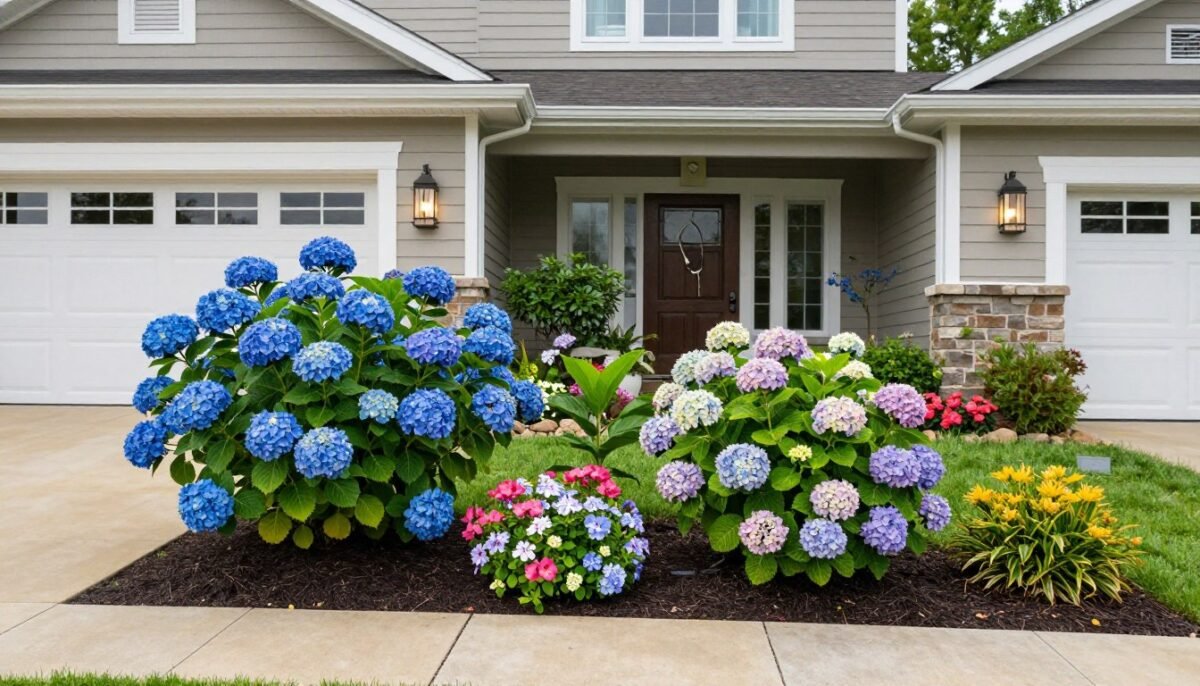
Hydrangeas bring unmatched beauty to front yard landscapes with their spectacular blooms and versatile design potential. These stunning shrubs transform ordinary spaces into breathtaking gardens that captivate neighbors and visitors alike.
Whether you want to create a cottage garden feel or modern landscape design, hydrangeas offer endless possibilities. Their large, colorful flowers bloom from summer through fall, providing months of visual interest.
This guide presents twenty inspiring front yard hydrangea landscaping ideas. Each concept showcases different ways to incorporate these magnificent plants into your outdoor space. From foundation plantings to dramatic focal points, you’ll discover designs that suit various styles and settings.
1. Classic Foundation Border Planting
Foundation plantings anchor your home to the landscape while adding curb appeal. Hydrangeas work perfectly in this role, creating a lush border between your house and lawn.
Plant hydrangeas along your home’s foundation in a continuous line. Space them three to four feet apart to allow proper growth. This arrangement creates a unified look that softens architectural lines.
Choose varieties that won’t outgrow the space. Compact cultivars like Little Lime hydrangea stay manageable near foundations. These shrubs reach three to five feet tall, making them ideal for planting under windows.
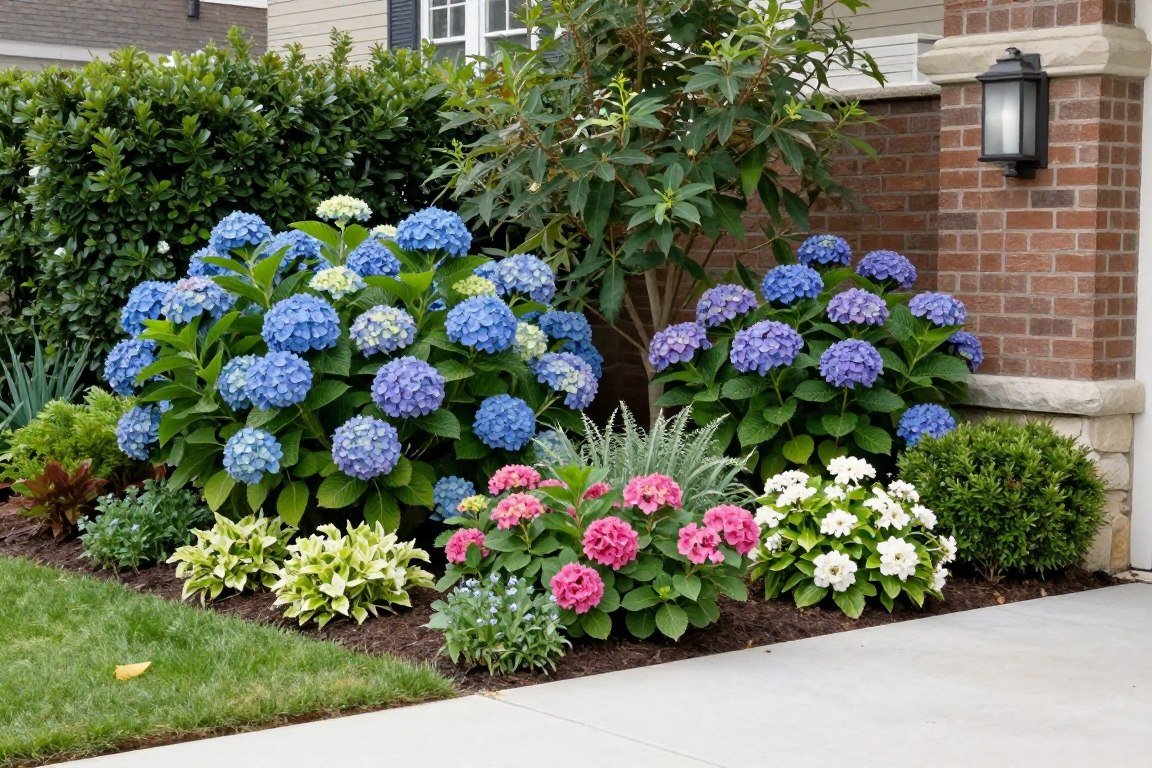
Mix hydrangea colors to add visual interest to your foundation border. Blue and pink varieties create a cottage garden aesthetic. White hydrangeas offer a more formal, elegant appearance that complements traditional home styles.
2. Symmetrical Pathway Lining
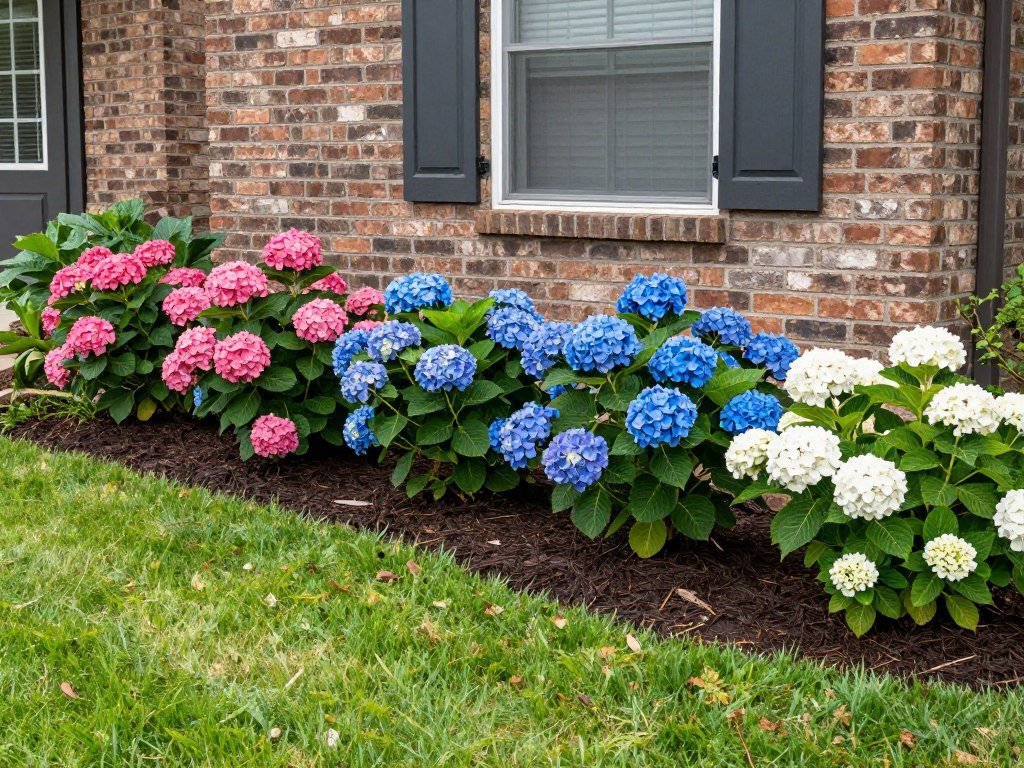
A hydrangea-lined walkway creates an inviting entrance to your home. This symmetrical design guides visitors while showcasing these beautiful flowering shrubs.
Plant matching hydrangeas on both sides of your front walk. Maintain consistent spacing between plants for balanced visual rhythm. This formal arrangement works especially well with straight pathways.
Select uniform variety for cohesive look. Panicle hydrangeas stand up well to foot traffic and maintain their shape throughout the growing season. Their cone-shaped blooms add vertical interest along horizontal paths.
Consider the mature size when planning your pathway plantings. Leave adequate space between hydrangeas and the walk edge. This prevents overgrowth from blocking the path or requiring excessive pruning.
3. Mixed Border Garden Design
Combine hydrangeas with complementary plants to create layered, textured borders. This approach adds depth and extends seasonal interest beyond hydrangea bloom time.
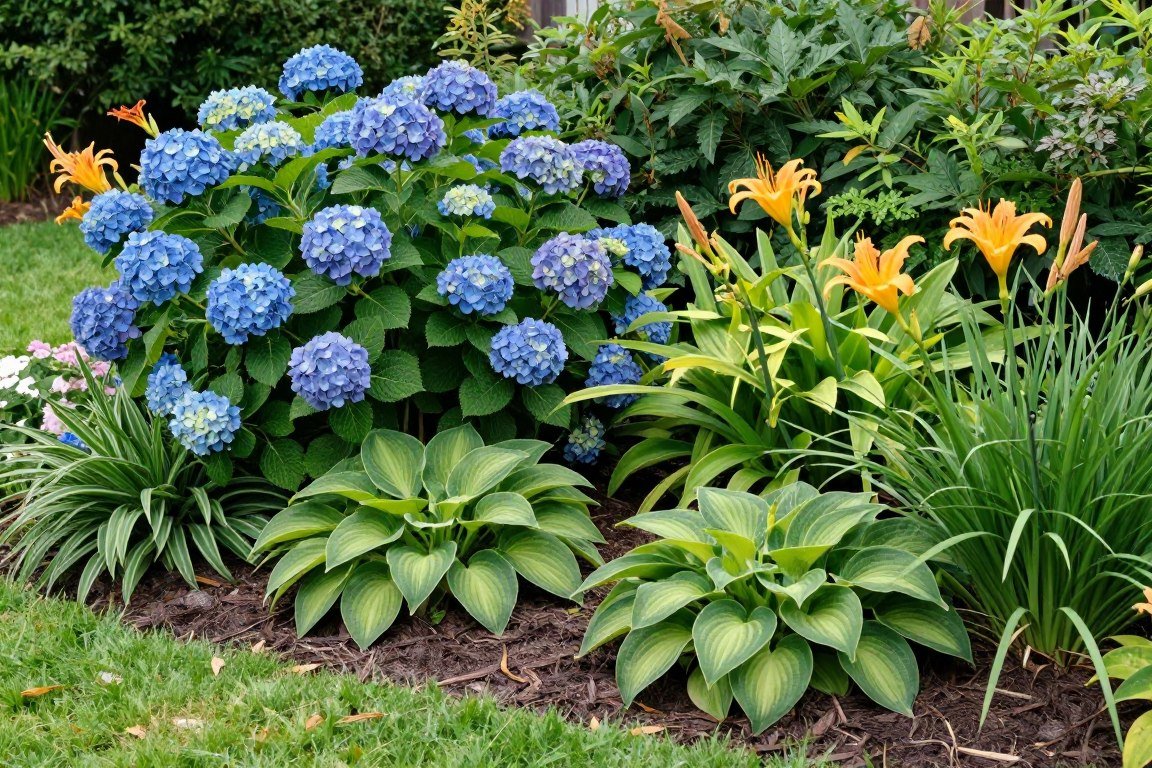
Position hydrangeas as anchor plants in mixed borders. Their substantial size and bold flowers provide structure. Surround them with perennials that offer contrasting textures and bloom times.
Choose companion plants that share similar soil and light requirements. Hostas thrive in the same conditions as hydrangeas and provide attractive foliage. Daylilies add early summer color before hydrangeas reach peak bloom.
Create color harmonies by coordinating your plant palette. Purple salvia complements blue hydrangeas beautifully. Yellow coreopsis creates striking contrast with pink hydrangea varieties.
4. Corner Accent Feature
Transform empty front yard corners into stunning focal points with hydrangea groupings. This strategy maximizes unused space while creating visual interest from multiple viewing angles.
Plant three to five hydrangeas in triangular or curved arrangements at yard corners. Vary plant heights by choosing different varieties or pruning selectively. This creates dimensional interest that draws the eye.
Add hardscape elements to enhance corner plantings. Place decorative rocks or small boulders among hydrangeas for textural contrast. A garden bench positioned nearby turns the corner into a destination.
Select varieties that bloom at different times for extended color. Early-blooming mountain hydrangeas start the show in early summer. Panicle types finish the season with late summer and fall flowers.
5. Front Porch Container Gardens
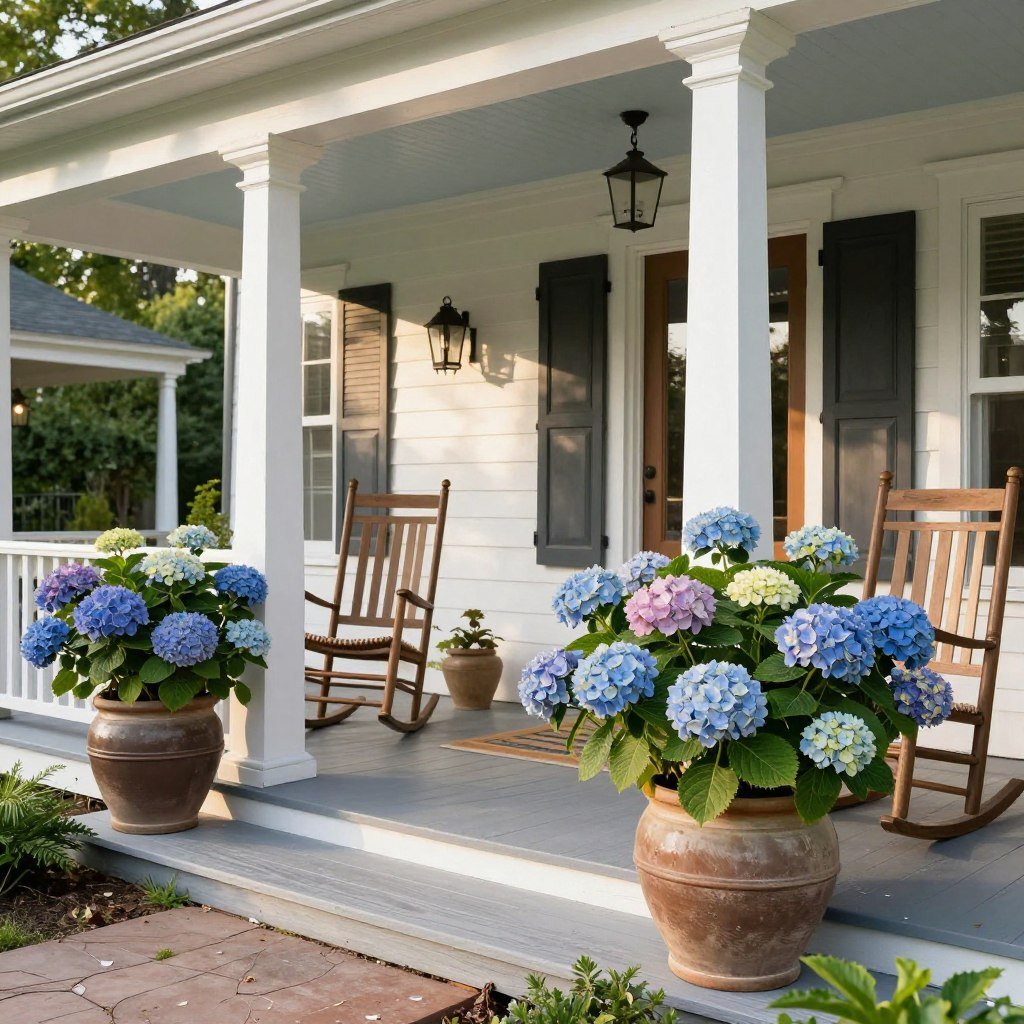
Potted hydrangeas add flexibility and charm to front porch areas. Container planting allows you to move plants seasonally and control growing conditions precisely.
Choose dwarf hydrangea varieties suited to container life. Cityline series hydrangeas stay compact while producing full-sized blooms. These plants thrive in large pots placed on porches or beside entrance steps.
Use substantial containers that complement your home’s architecture. Ceramic pots work well for traditional styles. Modern homes benefit from sleek, contemporary planters in neutral colors.
Ensure containers have adequate drainage holes. Hydrangeas need consistent moisture but suffer in waterlogged soil. Add a layer of gravel at the pot bottom before filling with quality potting mix.
6. Dramatic Mass Planting
Create bold visual impact with large groupings of the same hydrangea variety. Mass plantings make powerful statements in spacious front yards.
Plant at least seven to nine hydrangeas of one variety in sweeping curves or organic shapes. This repetition creates unity and amplifies the plants’ natural beauty. The effect becomes particularly stunning during peak bloom periods.
Choose smooth hydrangeas for successful mass plantings in many climates. These native shrubs tolerate various conditions and produce reliable blooms each year. Their white to pink flowers create clouds of color from summer into fall.
Prepare the entire planting area before installation. Amend soil consistently throughout the bed for uniform plant performance. This prevents patchy growth that undermines the dramatic effect you’re creating.
7. Layered Height Landscape
Arrange plants in graduated heights to create depth and visual flow. This technique makes front yards appear larger while showcasing each plant effectively.
Position tall hydrangea varieties at the back of borders. Oakleaf hydrangeas reach six to eight feet, providing excellent backdrop material. Their large leaves and pyramid-shaped flowers add architectural interest.
Place medium-height hydrangeas in the middle layer. Standard mophead and lacecap varieties fit this role perfectly at four to five feet tall. They bridge the transition between tall background plants and low foreground elements.
Complete the front layer with compact varieties or complementary groundcovers. Miniature hydrangeas or spreading perennials finish the layered look. This arrangement ensures all plants remain visible and contribute to the overall design.
8. Elegant White Garden Theme
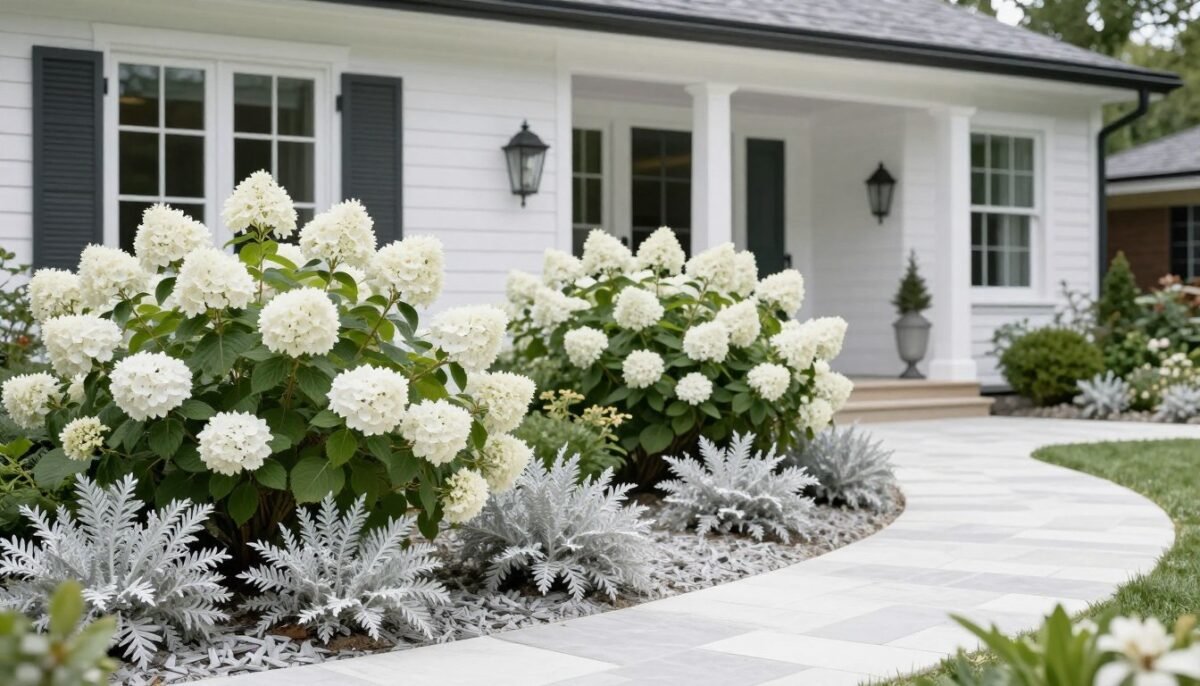
White hydrangeas create sophisticated, timeless landscapes that glow in evening light. A monochromatic white garden offers elegance and versatility that works with any home style.
Select white-flowering hydrangea varieties for cohesive color schemes. Annabelle hydrangea produces massive white blooms on reliable shrubs. Panicle types like Limelight offer white flowers that age to soft pink.
Add silver and gray foliage plants to enhance the white garden palette. Lamb’s ear and dusty miller provide textural contrast. These soft colors complement white hydrangea blooms beautifully.
Incorporate white hardscaping elements to extend the theme. White stone mulch or light-colored pavers echo flower colors. This creates visual continuity throughout your front yard landscape design.
9. Shade Garden Solution
Many hydrangeas thrive in partial shade, solving the challenge of landscaping shady front yards. These versatile shrubs bring color to areas where sun-loving plants struggle.
Mountain hydrangeas excel in shade gardens with their early blooms and compact size. They tolerate more shade than most varieties while producing abundant flowers. Plant them under trees or on the north side of your home.
Smooth hydrangeas also perform well in shade, though flowers may be slightly less abundant. Their native woodland origins make them naturally adapted to lower light conditions. These shrubs bloom reliably even with just a few hours of morning sun.
Enhance shade plantings with woodland companions. Ferns and hostas create natural-looking combinations. Astilbes add feathery textures that contrast with hydrangea’s bold leaves and flowers.
10. Colorful Hedge Alternative
Replace traditional evergreen hedges with flowering hydrangea rows. This approach provides seasonal color while maintaining the structure and definition hedges offer.
Plant hydrangeas in straight lines with consistent spacing for hedge effect. Choose varieties with similar growth habits and mature sizes. This ensures uniform appearance throughout the hedge line.
Panicle hydrangeas work exceptionally well as flowering hedges. Their upright growth habit and sturdy stems maintain shape without extensive pruning. Varieties like Quick Fire provide early summer blooms that persist into fall.
Establish proper spacing based on mature plant width. Most hedge-style hydrangeas should be placed three to four feet apart. This allows plants to grow together while maintaining good air circulation.
11. Rock Garden Integration
Combine hydrangeas with stone elements for textured, low-maintenance landscapes. Rock gardens provide excellent drainage that hydrangeas appreciate during their growing season.
Nestle hydrangeas among boulders and decorative stones. The contrast between soft flowers and hard stone creates visual drama. This pairing works especially well in contemporary landscape designs.
Use stone mulch around hydrangea bases instead of organic materials. River rock or crushed granite provides clean appearance and excellent moisture retention. Stone mulch also helps regulate soil temperature throughout the year.
Select hydrangea varieties that complement stone colors. Blue hydrangeas pop against warm-toned sandstone. Pink varieties look stunning with gray granite or limestone.
12. Charming Mailbox Garden
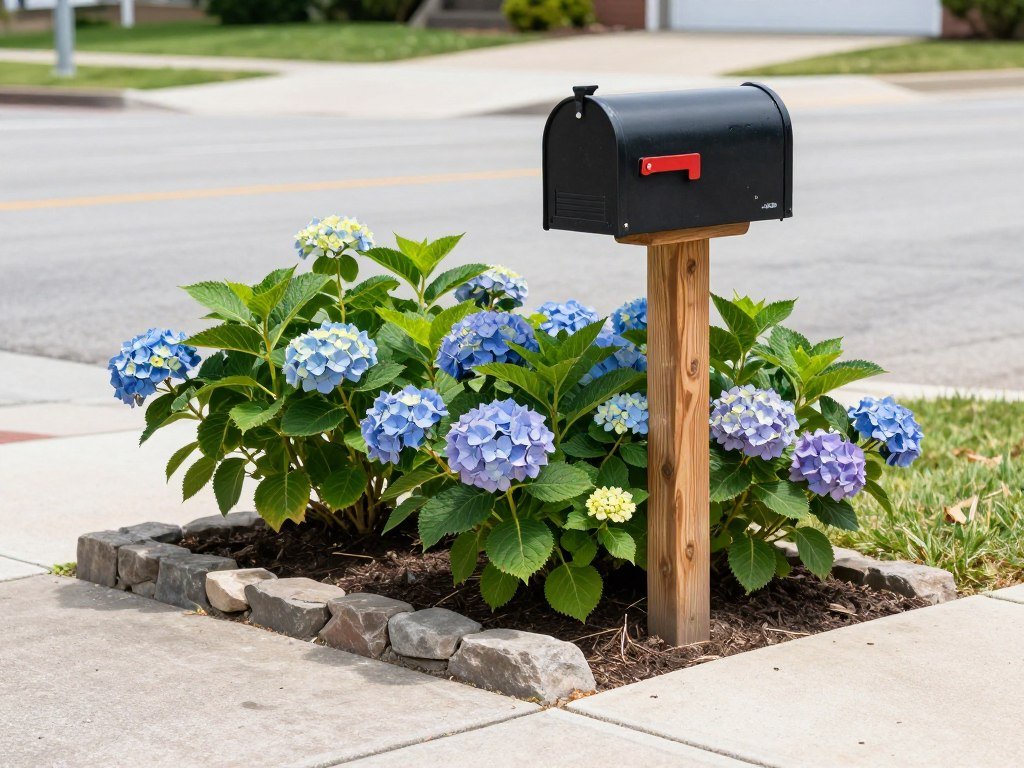
Frame your mailbox with hydrangeas to create a welcoming focal point at street’s edge. This small-scale project delivers significant curb appeal impact.
Plant compact hydrangeas on three sides of your mailbox post. Leave the street-facing side open for mail carrier access. This arrangement creates an attractive frame without interfering with mail delivery.
Choose varieties that won’t overwhelm the mailbox structure. Dwarf cultivars like Bobo or Little Quick Fire stay proportional to standard mailbox installations. These plants reach two to three feet tall at maturity.
Add low edging plants to complete the mailbox garden. Creeping phlox or sweet alyssum soften bed edges. These groundcovers provide early season color before hydrangeas bloom.
13. Vertical Interest with Climbing Hydrangea
Climbing hydrangeas add vertical dimension to front yard designs. These unique vines transform walls, fences, and arbors into living floral displays.
Train climbing hydrangeas up front porch posts or columns. The vine’s adhesive rootlets cling to surfaces naturally. White lacecap flowers appear in early summer, creating cascades of blooms.
Use climbing hydrangeas to soften blank wall spaces. Plant at the base of house walls or garage fronts. The vine grows slowly at first but eventually creates impressive vertical coverage.
Provide sturdy support structures for young climbing hydrangeas. These vines become heavy with foliage and flowers. Ensure trellises or arbors can handle the mature plant’s weight.
14. Japanese-Inspired Zen Garden
Incorporate hydrangeas into serene Japanese garden designs. These shrubs naturally complement the aesthetic principles of balance and natural beauty central to Japanese landscaping.
Position hydrangeas as accent plantings among traditional Japanese garden elements. Place them near stone lanterns or beside small bridges. Their rounded forms echo the organic shapes favored in this design style.
Mountain hydrangeas suit Japanese gardens particularly well. These varieties originate from Asian woodlands and blend authentically with the style. Their delicate lacecap flowers offer refined beauty.
Combine hydrangeas with classic Japanese garden plants. Maples provide contrasting foliage and fall color. Ornamental grasses add movement and texture that enhance the peaceful garden atmosphere.
15. Seasonal Succession Strategy
Plan plantings that provide color progression throughout growing seasons. Strategic variety selection extends your front yard’s visual interest from spring through fall.
Start with early-blooming mountain hydrangeas for late spring color. These varieties flower weeks before most other types. Their blooms bridge the gap between spring bulbs and summer perennials.
Add mophead and lacecap varieties for mid-summer display. These classic hydrangeas bloom from June through August in most regions. Their large flowers provide peak-season impact.
Finish with panicle hydrangeas that bloom into fall. Varieties like Limelight and Quick Fire continue flowering until frost. Their flowers often develop pink tones as temperatures cool, adding autumn interest.
16. Romantic Cottage Garden Style
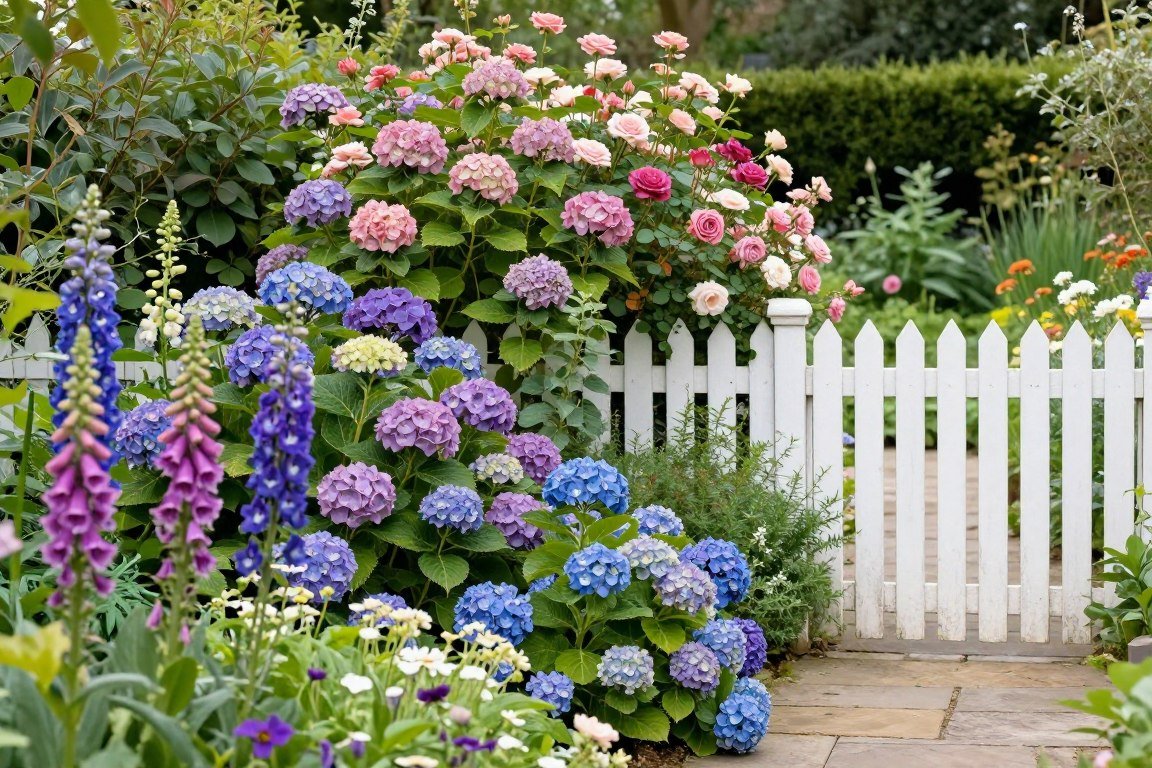
Create an informal, abundant cottage garden using hydrangeas as anchor plants. This relaxed style celebrates profusion and variety over formal structure.
Mix different hydrangea colors throughout cottage garden beds. Pink, blue, and white varieties planted randomly create the casual look characteristic of this style. Allow plants to grow together naturally without rigid spacing.
Combine hydrangeas with traditional cottage garden flowers. Roses make classic companions, with climbing varieties weaving through larger hydrangea shrubs. Delphiniums and foxgloves add vertical spikes that contrast with rounded hydrangea forms.
Let plants spill over pathway edges for authentic cottage garden feel. This informal approach softens hard lines and creates intimate garden spaces. The overall effect should feel abundant and slightly wild rather than manicured.
17. Modern Minimalist Design
Hydrangeas work beautifully in contemporary landscapes when used with restraint and intention. Modern design principles emphasize clean lines and limited plant palettes.
Plant single-variety hydrangea groups in geometric patterns. Square or rectangular bed shapes suit modern aesthetics. Use white or lime-green hydrangeas for sophisticated color palettes that complement contemporary architecture.
Surround hydrangea plantings with clean hardscape materials. Smooth concrete pavers or steel edging emphasize modern style. Dark mulch creates strong contrast that highlights plant forms and flowers.
Keep plant varieties limited for cohesive modern look. Repeat the same hydrangea cultivar throughout front yard. This repetition creates visual rhythm and unity essential to contemporary landscape design.
18. Slope Stabilization Planting
Hydrangeas provide both beauty and function on sloped front yards. Their extensive root systems help prevent erosion while transforming challenging terrain into attractive landscapes.
Plant hydrangeas in staggered rows across slopes. This arrangement provides comprehensive soil coverage and root stabilization. Space plants more densely on steeper grades for faster establishment and better erosion control.
Choose oakleaf hydrangeas for slope plantings in many regions. These native shrubs develop deep root systems that hold soil effectively. Their drought tolerance once established makes them ideal for slopes where watering proves difficult.
Combine hydrangeas with ornamental grasses on slopes. Grasses provide immediate erosion control while hydrangeas establish. This combination creates textured plantings that remain interesting year-round.
19. Evening Moonlight Garden
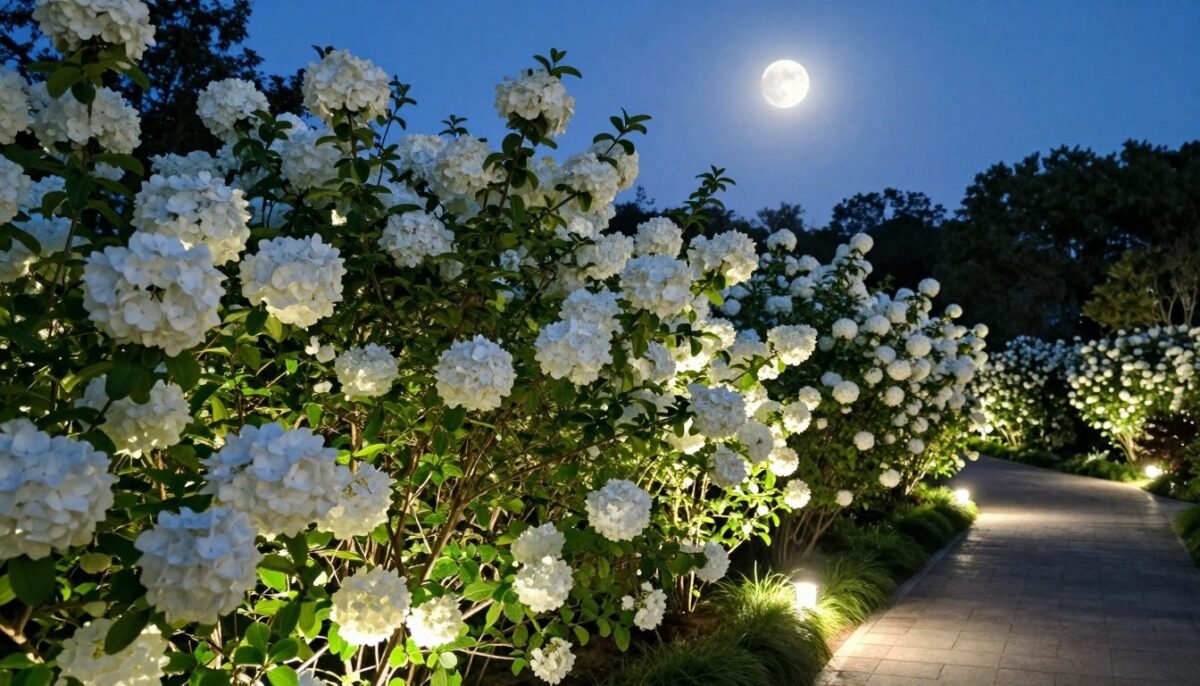
Design gardens that shine in evening hours when many homeowners enjoy outdoor spaces. White and light-colored hydrangeas create luminous displays that seem to glow at dusk.
Feature white hydrangea varieties prominently in moonlight garden designs. Annabelle and Blushing Bride hydrangeas practically glow in low light conditions. Their pale flowers reflect moonlight and landscape lighting beautifully.
Position hydrangeas where evening viewing occurs most often. Plant near patios, along pathways to front doors, or beside seating areas. This placement maximizes enjoyment during evening hours.
Add landscape lighting to enhance nighttime garden appeal. Uplights positioned beneath hydrangeas create dramatic shadows and highlight flower masses. Path lights ensure safe navigation while showcasing garden beauty.
20. Pollinator-Friendly Paradise
Create gardens that support beneficial insects while beautifying your front yard. Certain hydrangea varieties provide nectar and habitat for pollinators including butterflies and bees.
Choose lacecap hydrangeas for maximum pollinator benefit. Their fertile center flowers produce accessible nectar unlike double-flowered mophead types. Butterflies and native bees visit these blooms throughout summer.
Combine hydrangeas with other pollinator plants for extended food sources. Native perennials like coneflowers and black-eyed Susans complement hydrangeas perfectly. This diversity supports various beneficial insects across seasons.
Avoid pesticides in wildlife-friendly gardens. Chemical treatments harm the beneficial insects you’re trying to attract. Healthy hydrangeas rarely need chemical intervention when planted in appropriate conditions with good care.
Essential Planting and Care Guidelines
Successful hydrangea landscapes begin with proper planting and ongoing maintenance. Understanding these fundamentals ensures your plants thrive and deliver years of beautiful blooms.
Soil Preparation and Requirements
Hydrangeas prefer rich, well-draining soil with consistent moisture. Test your soil pH before planting, as this affects flower color in some varieties. Blue hydrangeas need acidic soil around 5.5 pH, while pink varieties prefer slightly alkaline conditions near 6.5 pH.
Amend existing soil with compost or aged manure before planting. This improves drainage in heavy clay and increases water retention in sandy soils. Work amendments deeply into the planting area for best results.
Light and Location Selection
Most hydrangeas perform best with morning sun and afternoon shade. This protects flowers from scorching while providing enough light for abundant blooms. Exceptions include panicle hydrangeas, which tolerate full sun in most climates.
Avoid planting hydrangeas in deep shade. Insufficient light results in sparse flowering and weak growth. Look for locations receiving at least four hours of sunlight daily for optimal performance.
Watering and Fertilization
Newly planted hydrangeas need regular watering until established. Provide one inch of water weekly during the first growing season. Mature plants require less frequent watering but appreciate consistent moisture during bloom periods.
Fertilize hydrangeas in early spring with balanced fertilizer. Avoid high-nitrogen formulas that promote foliage at the expense of flowers. Apply fertilizer according to package directions, typically once or twice during the growing season.
Best Hydrangea Varieties for Full Sun
Some hydrangeas tolerate more intense light than others. These varieties excel in sunny locations.
- Panicle hydrangeas (Hydrangea paniculata)
- Limelight and Little Lime varieties
- Quick Fire and Fire Light cultivars
- Smooth hydrangeas in northern climates
Top Shade-Tolerant Varieties
These hydrangeas thrive in lower light conditions typical of many front yards.
- Mountain hydrangeas (Hydrangea serrata)
- Oakleaf hydrangeas (Hydrangea quercifolia)
- Bigleaf hydrangeas (Hydrangea macrophylla)
- Climbing hydrangeas for vertical shade spaces
Compact Varieties for Small Spaces
These dwarf cultivars fit perfectly in tight areas without sacrificing flower power.
- Bobo panicle hydrangea (2-3 feet)
- Little Quick Fire (3-5 feet)
- Cityline series bigleaf types
- Tiny Tuff Stuff mountain hydrangea
Long-Blooming Selections
Maximize color impact with varieties offering extended bloom periods.
- Endless Summer bigleaf hydrangeas
- Let’s Dance series reblooming types
- Pinky Winky panicle hydrangea
- Incrediball smooth hydrangea
Pruning Techniques
Pruning requirements vary significantly by hydrangea type. Bigleaf and mountain varieties bloom on old wood and require minimal pruning. Remove only dead wood and spent flowers on these types.
Panicle and smooth hydrangeas bloom on new wood and tolerate more aggressive pruning. Cut these varieties back in late winter or early spring before new growth begins. This encourages vigorous stems and abundant flowers.
Professional Design Principles for Hydrangea Landscapes
Creating stunning hydrangea displays requires understanding fundamental landscape design concepts. These principles help transform random plantings into cohesive, professional-looking gardens.
Color Theory and Combinations
Hydrangea colors range from pure white through pink, blue, purple, and green. Understanding color relationships helps create harmonious or dramatic effects in your front yard design.
Analogous color schemes use related hues for peaceful, unified looks. Combine blue and purple hydrangeas with purple perennials for serene gardens. This approach creates restful landscapes that feel naturally coordinated.
Complementary color strategies place opposite colors together for maximum impact. Orange daylilies paired with blue hydrangeas create vibrant contrast. Yellow coreopsis makes pink hydrangeas pop with energizing visual tension.
Scale and Proportion
Successful landscapes maintain appropriate relationships between plant sizes and surrounding elements. Hydrangeas must fit proportionally within their settings to avoid overwhelming small spaces or disappearing in large yards.
Match hydrangea size to house scale. Large homes can accommodate massive oakleaf varieties reaching eight feet tall. Smaller houses look better with compact cultivars that stay under four feet.
Consider mature plant dimensions during planning. That three-foot nursery hydrangea may eventually spread six feet wide. Provide adequate space for full development without future overcrowding.
Repetition and Unity
Repeating elements throughout landscapes creates visual rhythm and cohesion. This principle applies to plant choices, colors, and arrangement patterns.
Use the same hydrangea variety in multiple locations across your front yard. This repetition ties different garden areas together. Visitors’ eyes follow the repeated elements, creating natural flow through the space.
Echo flower colors in different plants throughout the garden. If using pink hydrangeas, add pink roses or astilbes elsewhere. This color repetition strengthens overall design unity.
Seasonal Maintenance Calendar
Proper timing of maintenance tasks keeps hydrangeas healthy and blooming reliably. Follow this seasonal guide for optimal plant performance throughout the year.
Spring Tasks
Early spring marks the beginning of active hydrangea care. Remove winter mulch as soil temperatures warm and new growth appears. Apply fresh compost around plant bases to enrich soil.
Prune panicle and smooth hydrangeas before new leaves emerge. Remove dead wood from all varieties. Apply balanced fertilizer according to package directions as plants break dormancy.
Summer Care
Monitor moisture levels closely during hot weather. Hydrangeas may need supplemental watering during dry periods. Water deeply at soil level rather than overhead to prevent disease.
Deadhead spent flowers to maintain neat appearance. This doesn’t increase bloom on most varieties but improves visual appeal. Watch for pests like Japanese beetles and treat if necessary.
Fall Preparation
Reduce fertilization in late summer to avoid encouraging tender new growth before winter. Continue watering until ground freezes. Fall hydration helps plants withstand winter stress.
Leave flower heads on plants through fall and winter. These dried blooms provide visual interest and protect next year’s buds. Apply mulch layer after ground freezes to moderate soil temperature fluctuations.
Winter Protection
Most established hydrangeas need minimal winter protection in appropriate zones. Apply extra mulch around marginally hardy varieties. Burlap screens shelter plants from harsh winds in exposed locations.
Avoid heavy pruning before winter. This removes protective growth and exposes plants to damage. Save major pruning for appropriate times based on variety type.
Troubleshooting Common Problems
Even well-maintained hydrangeas occasionally encounter challenges. Recognizing problems early allows quick intervention before serious damage occurs.
Poor Flowering Issues
Lack of blooms frustrates gardeners more than any other hydrangea problem. Multiple factors cause this issue, requiring systematic troubleshooting to identify the cause.
Improper pruning represents the most common flowering problem. Cutting bigleaf hydrangeas in fall or spring removes flower buds. Learn your variety’s bloom habit before pruning to avoid this mistake.
Insufficient light also reduces flowering. Hydrangeas in deep shade produce lush foliage but few flowers. Transplant to brighter locations or remove overhead obstructions blocking sunlight.
Leaf Problems and Solutions
Brown leaf edges indicate insufficient water or root damage. Increase irrigation during dry periods. Check soil drainage if overwatering seems unlikely as cause.
Yellow leaves often signal nutrient deficiencies or pH problems. Test soil and amend accordingly. Iron chlorosis appears as yellow leaves with green veins in alkaline soils.
Pest and Disease Management
Healthy hydrangeas resist most pests and diseases naturally. Cultural problems often make plants vulnerable to secondary infestations.
Powdery mildew appears as white coating on leaves during humid weather. Improve air circulation around plants. Avoid overhead watering that keeps foliage wet.
Japanese beetles chew holes in leaves and flowers during summer. Handpick small populations in morning when beetles move slowly. Consider targeted treatments for severe infestations.
Pro Tip: Most hydrangea problems stem from improper site selection or care rather than pests or diseases. Ensure plants receive appropriate light, water, and soil conditions before assuming disease or insect issues.
Creating Your Dream Hydrangea Landscape
These twenty front yard hydrangea landscaping ideas demonstrate the remarkable versatility of these beloved shrubs. From formal hedges to cottage gardens, hydrangeas adapt to virtually any design style while providing spectacular seasonal color.
Success with hydrangeas begins with understanding their basic needs. Proper site selection, soil preparation, and variety choice set the foundation for thriving plants. Regular maintenance keeps them healthy and blooming abundantly year after year.
Don’t hesitate to experiment with different arrangements and combinations. Gardening rewards creativity and personal expression. Your front yard should reflect your unique style while showcasing these magnificent flowering shrubs.
Start small if large projects feel overwhelming. Even a single well-placed hydrangea adds significant curb appeal. Expand your plantings gradually as confidence and experience grow.